

A mantra gives you a word, sound or short phrase to return to while you meditate. You might repeat it quietly, say it silently or use a phrase with meaning in your own spiritual tradition. The aim of this introductory practice is to explore a focus for your attention, rather than force yourself into a particular mood.
You do not need a silent mind, special equipment or a long session. Choose a phrase that feels comfortable, try it for a brief period that fits your day and notice whether you want to continue. A practice can be adapted or stopped.
In this guide
1. Use the phrase as a place to return
During mantra meditation, the repeated sound or words offer something specific to notice. If your attention moves to a shopping list, a worry or a noise outside, you can notice that and return to the phrase. You are not trying to win an argument with every thought.
Repetition may suit you better than listening to a long recording, or it may feel awkward. You can explore the difference without deciding that one response says something about your ability or character. Our introduction to learning to meditate describes other possible focuses if a phrase does not appeal to you.

2. Choose a modest purpose
Give the practice a manageable place in your day. You might want a quiet pause before answering a message or a moment to notice how you feel after work. “I will spend a short time with this phrase” is a clearer intention than “I must become completely calm.”
Decide what would make the attempt workable: a comfortable seat, a shorter duration or waiting until someone else can supervise the children. You can value the pause even if you finish with the same questions or feelings you had at the start.
3. Keep health expectations realistic
The National Center for Complementary and Integrative Health’s meditation overview describes research into possible benefits alongside important limits in the evidence. It also notes that the practical meaning of observed brain changes remains unclear. A brief mantra exercise cannot promise better memory, prevent cognitive decline or guarantee relief from anxiety.
If you have a health concern, keep appropriate care in place. A meaningful spiritual practice or a pleasant moment of reflection does not establish that an illness has been treated. You do not have to choose between valuing a personal practice and discussing symptoms with a healthcare professional.
4. Let breathing stay comfortable
You can repeat the phrase at an easy pace while breathing naturally. There is no need to fill your lungs as much as possible, hold your breath or make every repetition match an exact count. Keep your voice quiet enough to feel comfortable if you speak aloud.
If coordinating words and breathing becomes distracting, let them happen independently. You can also use an external focus, keep your eyes open or finish the exercise. Stop rather than trying to push through dizziness or distress.
5. Pick words you can use honestly
A useful starting phrase can be ordinary and short. Consider what the words ask of you:
- “One thing at a time” can remind you to return to the present task.
- “Begin again” leaves room for attention to wander.
- “Let me listen” can express an intention without promising a result.
- A personally meaningful sound or prayer may fit your beliefs, if using it feels respectful and welcome.
Avoid requiring yourself to repeat something that feels false. “I never get angry” may feel like a demand to deny your experience; “I can pause before I answer” names a possible action. You do not have to tell yourself that everything is safe or that you have forgiven someone when that is not true for you.
If you want to learn a mantra from a particular tradition, seek its meaning and context from someone able to explain that tradition. A phrase does not need to be unfamiliar, expensive or described as secret to have personal value.
6. Try a short mantra practice
Choose a brief period you can comfortably set aside. The following is an optional introduction, not a prescribed treatment or a test of how deeply you can meditate.
- Settle in a supported position. A chair or bench is fine. Adjust your position when needed, and make sure anyone who depends on you has suitable supervision.
- Choose the phrase and say it gently. Repeat it silently or softly. Let your breathing continue at its own comfortable pace.
- Notice when attention moves. Return to the phrase if you want to. You can change the pace or end the exercise.
- Finish deliberately. Look around, move comfortably and choose your next ordinary activity. You do not have to assess whether you reached a special state.
If you use a timer, choose a gentle sound and a duration you can realistically manage. You can stop before it sounds. Avoid inward-focused practice while driving or doing another task that needs close attention.
7. Adjust the practice to real life
When your attention keeps wandering
Notice what is pulling your attention rather than labelling every interruption a failure. If a task genuinely needs action, you can deal with it. If it can wait, a short note may help you leave it for later.
The NHS guidance on mindfulness explains that the aim is not to make thoughts disappear. You can recognise a thought and decide whether to return to the practice. You do not need to replace every uncomfortable thought with a positive one.
If you like using beads
Some people use a strand of beads to accompany repetition. Beads are optional; you can use a phrase without counting anything. If beads are part of your spiritual tradition, follow an approach that respects its meaning rather than treating a particular number as a required health formula.
There is no need to buy a set to begin. If you do use beads at home, store them safely away from young children.
When the phrase does not fit
You may notice that a word sounds harsh, brings up an unwanted memory or leaves you feeling pressured. Choose a different phrase, try an ordinary sound in the room or stop. Changing the words does not mean that you have failed to commit.
It can help to ask, “Would I say this kindly to someone else?” If the answer is no, try simpler language. You do not have to repeat a teacher’s interpretation of what you should feel.
When family life interrupts
If a child needs you, respond to the child. You can finish the pause and return another day. Protecting sleep, asking someone to share a task or having a conversation about your workload may be more useful than adding a daily practice you cannot sustain.
Your own interest in meditation does not require a partner or child to join in. For a separate discussion of optional quiet activities for children, see Meditation at Bedtime: Gentle Options for Your Child.
8. Decide what helps and when to stop
After an attempt, ask concrete questions: Were the words comfortable? Was the setting practical? Would a shorter pause or a different activity suit you better? A simple note about what you would change is enough; you do not need a score or an unbroken streak.
Meditation and mindfulness do not suit everyone and can sometimes make people feel worse. If the practice leaves you distressed, stop and return to an ordinary activity that feels manageable. Speak with a qualified health professional if distress persists or you need help choosing an approach. Do not replace or delay recommended care with meditation.
You can keep a mantra as one optional way to pause, adapt it to your beliefs and circumstances, or leave it aside. The useful choice is the one that makes room for your actual needs.
When a phrase starts to feel like a demand
Try wording such as “I can take one breath before I answer,” or give yourself a brief silence. Repeat it gently only while it feels useful. You can also choose to move, rest or listen to sounds in the room.
If stillness increases anxiety or distress, stop and consider a different kind of support. A helpful practice can fit your needs rather than requiring a particular experience.
Read the infographic in text
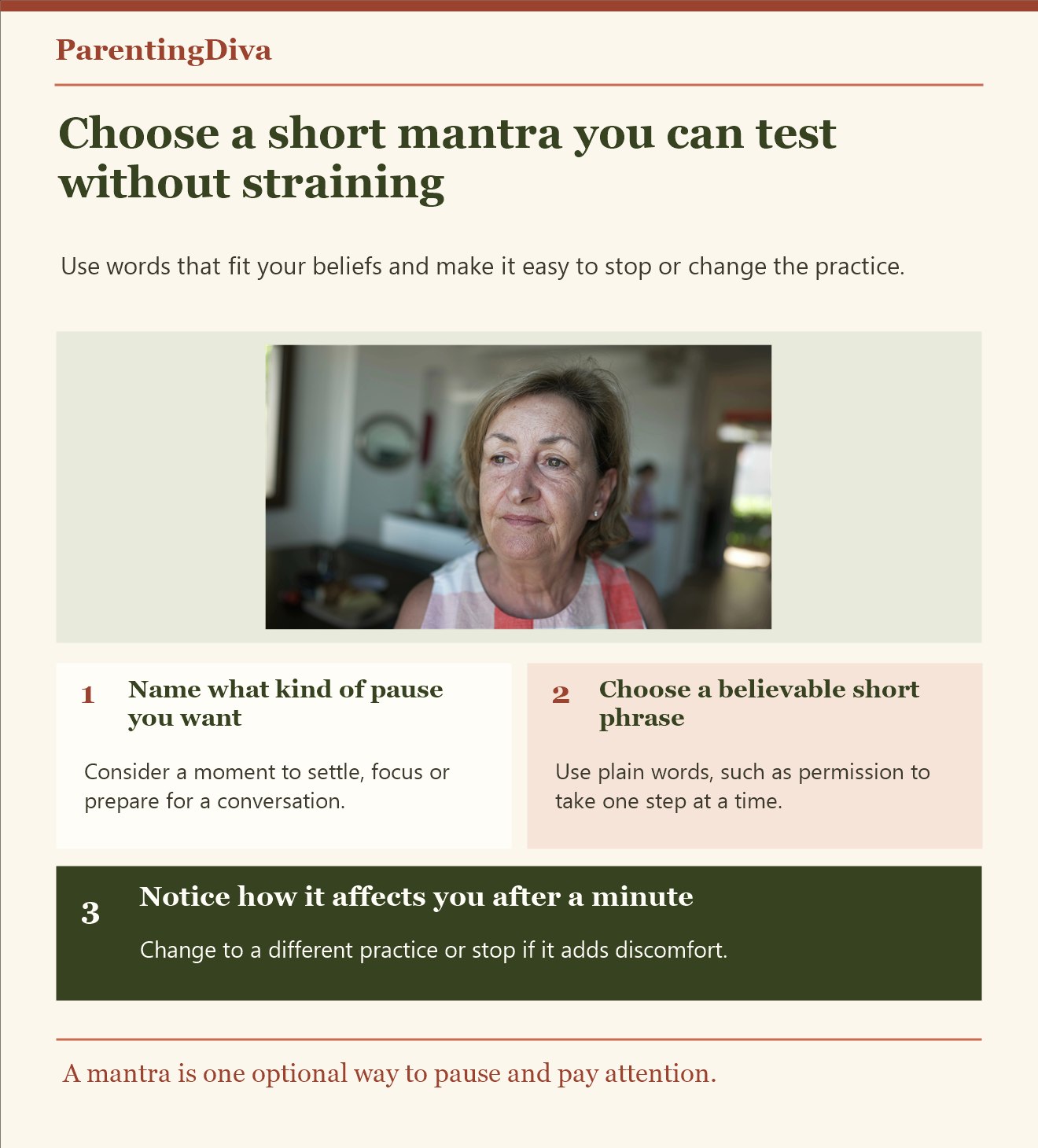
Choose a short mantra you can test without straining
Use words that fit your beliefs and make it easy to stop or change the practice.
- Name what kind of pause you want Consider a moment to settle, focus or prepare for a conversation.
- Choose a believable short phrase Use plain words, such as permission to take one step at a time.
- Notice how it affects you after a minute Change to a different practice or stop if it adds discomfort.
A mantra is one optional way to pause and pay attention.