

When something painful happens, “Why us?” can be a very human question. A loss, separation, health problem or sudden change at work can affect your own feelings and the way your family gets through the day. You do not have to find a lesson or a positive explanation before asking for help.
Some people find comfort in spiritual meaning. Others feel angry, uncertain or unable to make sense of what happened. You can respect those differences while concentrating on the care, information and practical support your family needs now.
On this page
1. Name the difficulty without blaming yourself
Describe what happened as clearly as you can: “Our plans have changed,” “We have lost someone important,” or “I am worried about what comes next.” You can acknowledge the seriousness of the situation without deciding that your family deserved it.
Responsibility is specific. If you made a mistake, you may need to apologize or put something right. That is different from assuming that every painful event is a punishment, a failure of gratitude or a lesson you brought on yourself.
You may not have an answer to why something happened. It is acceptable to say, “I do not understand this yet,” while still seeking the information or professional help that could clarify practical questions.
2. Work out what needs care today
For the next few hours, focus on immediate needs rather than solving the whole future. Consider whether everyone is safe, who needs care, and which arrangements cannot wait. Medical concerns and immediate danger need appropriate urgent help.
- Keep one ordinary task manageable. A simple meal or an agreed school pickup can reduce one source of uncertainty.
- Identify a time-sensitive question. Find out whom to contact and what information they need.
- Postpone an optional demand. You can cancel a social plan or ask for more time when circumstances change.
This is a way to organize the day, not a test of how well you are coping. If even a small task feels difficult, ask someone to help you choose what matters first.

3. Share the load in specific ways
People may want to help but not know what is useful. A clear request can make the next step easier to understand: “Could you bring dinner on Tuesday?” or “Can you sit with me while I make this call?” Give the person room to say what they can manage.
Think beyond one source of support. Depending on the situation, you might contact a trusted person, school staff, a healthcare professional, a community service or someone qualified to explain a practical decision. You do not have to tell everyone the full story.
If you are carrying care responsibilities, include your own needs in the plan. Food, rest, company and help with decisions matter for you too. Needing support does not make you a less caring parent.
4. Give children room for questions
Use clear words suited to your child’s understanding. Explain what you know, what remains uncertain and which everyday arrangements are in place. You can say, “I do not know yet, but I will tell you when I find out,” instead of making a promise you cannot keep.
When someone has died, the NHS guidance on children and bereavement encourages honest communication and opportunities to talk about the person. Support can include a trusted adult and an appropriate bereavement service.
Listen without requiring a particular reaction. A child may want to talk now, ask again later or take a break to play. If you are concerned about their wellbeing or behavior, ask a suitable health or school professional for guidance.
5. Leave meaning and recovery open
You may eventually find something you have learned, or you may continue to regard the event as unfair. Neither response is a debt you owe to other people. You do not have to be grateful for harm or promise that it will make you stronger.
The NHS information on grief and loss describes varied reactions and ways to seek support. If distress is persistent, worsening or making daily life difficult, speak with a qualified health professional.
For now, one caring choice can be enough: accept some help, clarify an arrangement or make space to be together. Your family can receive care while the bigger questions remain unanswered.
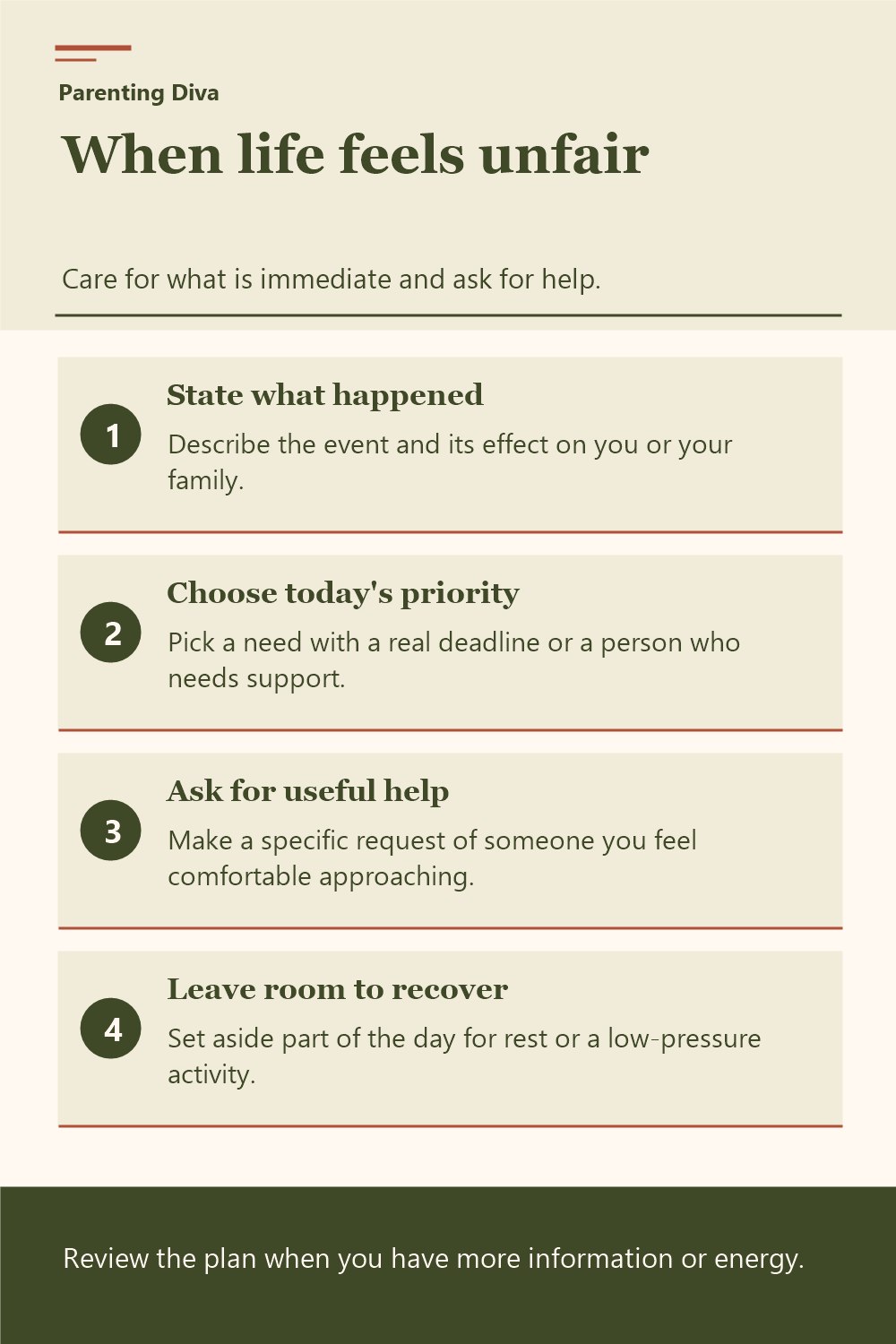
Read the infographic in text
When life feels unfair
Care for what is immediate and ask for help.
- State what happened Describe the event and its effect on you or your family.
- Choose today’s priority Pick a need with a real deadline or a person who needs support.
- Ask for useful help Make a specific request of someone you feel comfortable approaching.
- Leave room to recover Set aside part of the day for rest or a low-pressure activity.
Review the plan when you have more information or energy.