

A vision board gathers pictures, words or reminders of things you want to make room for. It can be a creative way to explore priorities, whether you are thinking about family time, learning, rest or a change at home.
The useful question is what the board helps you notice and do. Images cannot guarantee an outcome, and you do not need to be in a cheerful mood to start. Make a board that serves your family rather than becoming another standard to meet.
On this page
Choose a few meaningful priorities
Start with what you want everyday life to include. “More time together” could mean an occasional shared meal, a short game or a conversation without a phone in your hand. Different families will choose different priorities.
Include needs that are easy to overlook. Rest, accessible routines and asking for help deserve space beside exciting plans. You can also leave an area unfinished when you are still deciding.
If you use a vision board as part of a manifestation practice, let that be a source of personal meaning. Keep practical decisions grounded in resources, actual opportunities and the choices of everyone involved.
Use simple materials you already have
A sheet of paper, a notebook page or an existing digital tool can be enough. There is no need to buy supplies or subscribe to an app. Choose a format you can update and keep somewhere appropriate.
- Write a few words describing the priority.
- Add a drawing, a personal photo or another image you have permission to use.
- Leave room for one small action and any help it needs.
- Keep private family details away from a board others may see.
A plain handwritten note can be as useful as an attractive collage. If searching for the perfect image becomes a distraction, use a word and move on.

Turn wishes into possible next steps
Under each priority, write an action you can identify. For a wish to read more, you might look at a library’s opening hours or choose a book already at home. A plan for family time might start with asking when everyone is available.
Then check the constraints: time, cost, access, energy and other responsibilities. A picture of a holiday does not create a budget or permission to travel. You can enjoy imagining something while postponing the decision.
Try this three-part note: “What matters to us? What could we try? What support would make it possible?” If the action is too large, make it smaller or keep it as a question to explore.
Invite family input without pressure
If children want to join in, offer choices suited to their age and interests. They might draw a place they enjoy or choose an activity to try together. Taking part should not require sharing a private worry or agreeing with an adult’s ambition.
A shared board should not make a child responsible for a parent’s happiness, finances or relationship. Avoid promises that wanting something strongly enough will make it happen. Explain what the family can choose and what depends on other circumstances.
Adults may disagree about priorities too. Discuss the difference rather than using the board as proof of what everyone should want. Separate boards or a smaller shared section may work better.
Review and change the board as life changes
Return to the board at a convenient time. Ask whether it still reflects your needs, whether an action helped and whether a goal has become less relevant. Remove items that create comparison or pressure.
A changed goal is information, not a failed vision. You can keep a meaningful direction, pause an expensive plan or decide that something else matters more now. The board is useful when it supports those choices.
Read the infographic in text
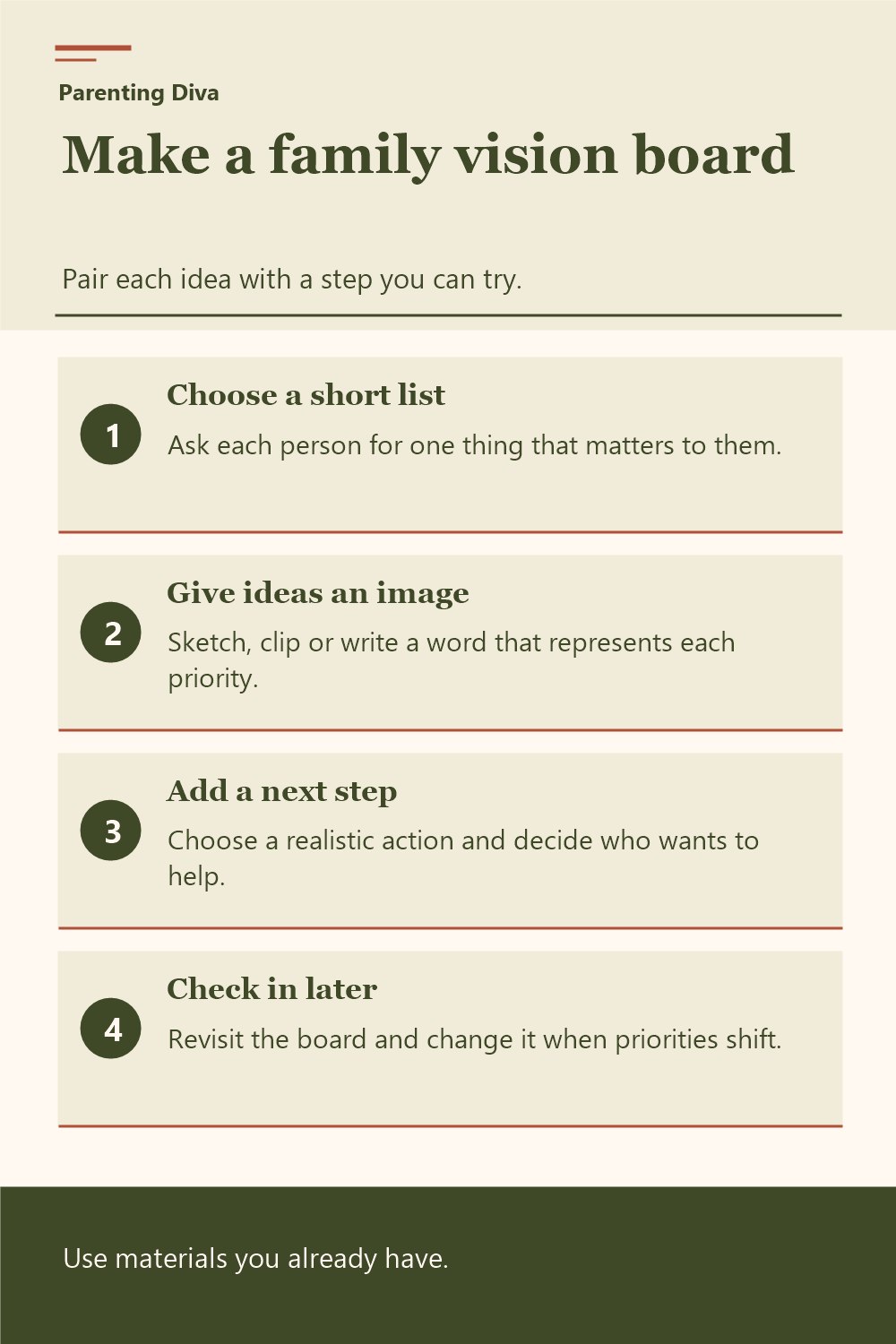
Make a family vision board
Pair each idea with a step you can try.
- Choose a short list Ask each person for one thing that matters to them.
- Give ideas an image Sketch, clip or write a word that represents each priority.
- Add a next step Choose a realistic action and decide who wants to help.
- Check in later Revisit the board and change it when priorities shift.
Use materials you already have.