
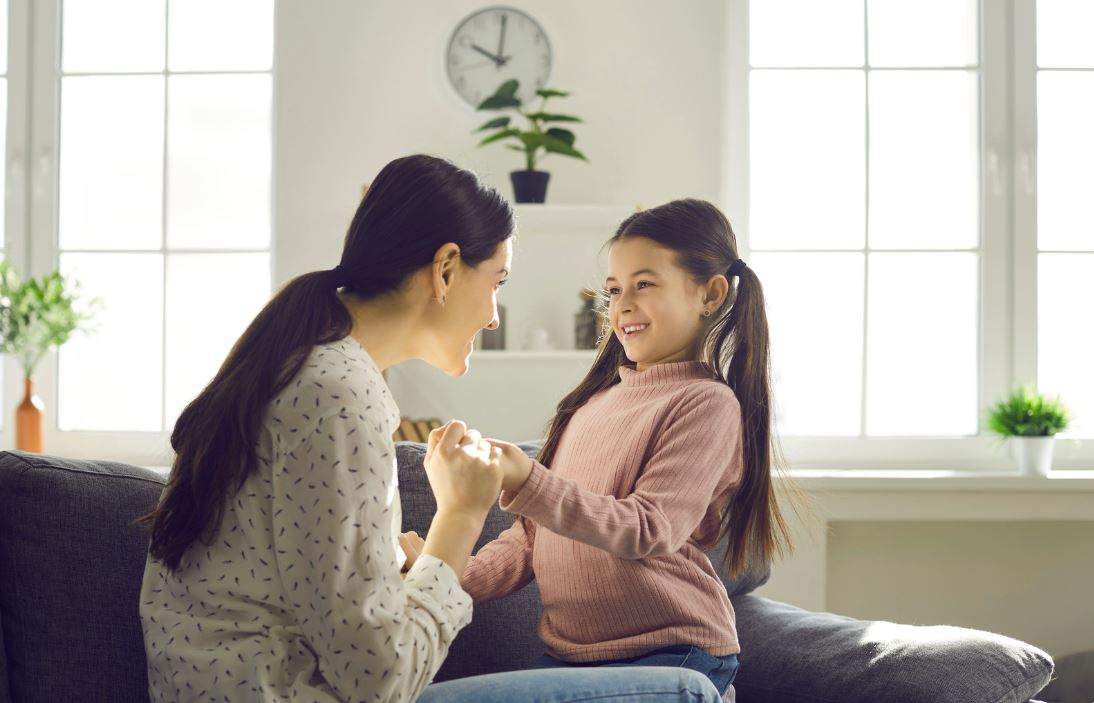
Teaching kindness can start with small, ordinary moments: making room at a table, asking before borrowing a toy or helping someone pick up dropped pencils. Children need examples they can understand and opportunities to practise, with an adult nearby when they need help.
Kindness does not require a child to be cheerful, hug someone, surrender a treasured possession or accept hurtful behaviour. You can teach consideration for other people alongside respect for your child’s own needs and boundaries.
On this page
Make kindness concrete and manageable
“Be nice” can leave a child unsure what to do. Describe an action instead: “Please leave some space so your sister can sit down,” or “Ask before using that.” Choose an expectation that fits the child’s age, abilities and energy rather than comparing them with another child.
Model consideration where your child can see it. Thank someone for their help, return something you borrowed and explain a small decision: “Our neighbour has heavy bags. I will ask whether they would like help.” Asking matters; the other person may prefer to manage differently.
Offer support when an action is difficult. You might help a young child take turns with a shared game by agreeing on a short turn and staying nearby. They can keep a favourite personal toy aside. Learning generosity does not mean losing all choice over their belongings.

Use stories and notice different perspectives
During a book, programme or pretend game, ask a gentle question: “What might that character need?” or “What else could the friend try?” There can be several plausible answers. Avoid insisting that a facial expression proves exactly how someone feels.
A child can show care without smiling or making eye contact. A wave, a spoken greeting, a picture or a helpful gesture may suit them better. Ask about their own experience too: “Was there a time when someone made it easier for you to join in?” Let them pass if they do not want to answer.
Keep these conversations short enough to remain enjoyable. A story does not need to become a test of whether your child has understood the correct moral lesson.
Notice helpful actions without demanding a performance
Describe what happened and why it helped: “You moved your bag so there was room for me. Thank you.” For young children, the CDC guidance on praise and rewards for ages 2 to 4 recommends praise that identifies the behaviour. Adapt your words to your child rather than making praise a public announcement they find uncomfortable.
You can appreciate kindness without labelling a child “the good one” or comparing siblings. Notice everyday effort, including an attempt that needs help: “You wanted to include your cousin. Let’s ask what game they would like.” Avoid requiring gifts, compliments or affection to earn an adult’s approval.
Children will sometimes be impatient, reluctant or upset. That moment is a chance for guidance, not evidence that they are an unkind person.
Practise words for feelings, limits and repair
A simple game with dolls, drawings or invented characters can help you try useful phrases: “Can I have a turn next?”, “Please stop” and “Do you want some help?” Offer more than one way to communicate, including gestures or pictures, when that suits your child.
When someone is hurt, stop the harmful action and attend to their needs. Later, when the child can take part, help them consider a repair: returning an item, rebuilding something or giving the other person space. A forced apology or hug is not the only option, and the other child does not have to accept affection or forgive immediately.
Adults need repair too. You can say, “I interrupted you. I am sorry. I will listen now,” and follow through. A child should not have to comfort you or take responsibility for an adult’s feelings.
Choose a small way to help together
Offer a realistic choice: make a card for someone who wants one, tidy a shared play area or contribute suitable items to a collection. Check an organisation’s current rules before volunteering or donating, and keep contact with unfamiliar people supervised and appropriate to the child’s age.
Ask afterward what worked and whether anyone needed something different. Kindness can include accepting “no, thank you,” resting when tired and asking an adult for help when someone is being hurt. Start with one manageable action and keep making room to practise.
When siblings disagree about lending a favourite toy
Ask each child what matters about the toy and help them choose a fair option. One child may say no to lending while still offering something else. If something was taken without permission, discuss putting it back and repairing what happened.
Give children words they can use next time. Praise a helpful action specifically rather than treating kindness as a label a child must earn.
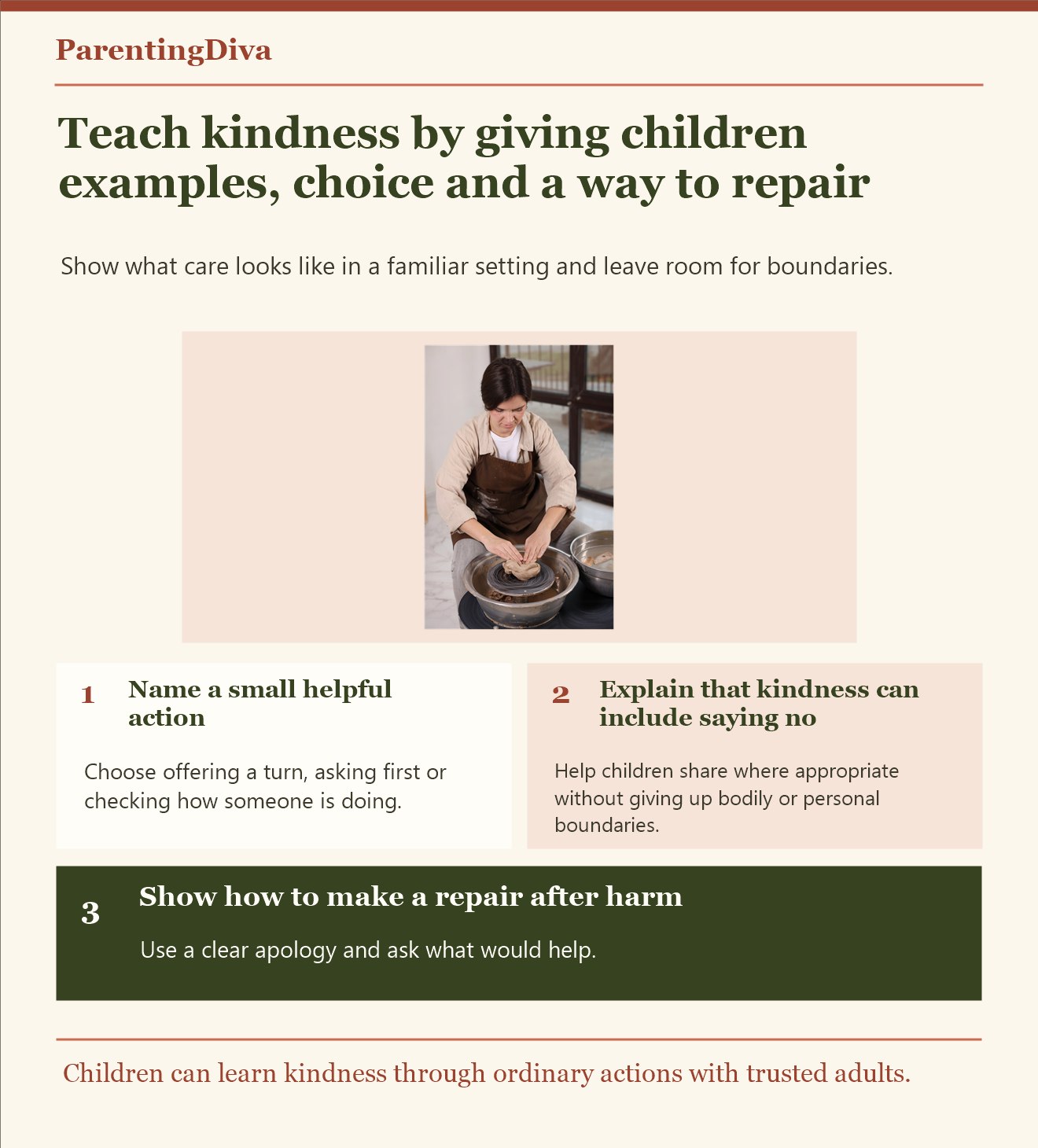
Read the infographic in text
Teach kindness by giving children examples, choice and a way to repair
Show what care looks like in a familiar setting and leave room for boundaries.
- Name a small helpful action Choose offering a turn, asking first or checking how someone is doing.
- Explain that kindness can include saying no Help children share where appropriate without giving up bodily or personal boundaries.
- Show how to make a repair after harm Use a clear apology and ask what would help.
Children can learn kindness through ordinary actions with trusted adults.