

A 2011 Florida bill proposed putting a parental involvement grade on report cards for children in prekindergarten through third grade. The bill died in committee. It still raises a question I think about: What kind of feedback would actually help a parent and a teacher support a child?
Ask what the grade would measure
Parents have a part to play in their children’s education. A grade can tell you whether someone signed a planner or made it to a meeting. It tells you less about the parent who reviews spelling words on the bus, the grandmother who handles after-school pickup or the caregiver who cannot get off work for a midday conference. If the school needs more involvement, it can start by explaining what would help and asking what the family can manage.

Give each other specific feedback
“Please be more involved” leaves a family guessing. “Could we try ten minutes of reading aloud twice a week and check in next Friday?” gives everyone something to work with. A parent might say, “My shift changes each week. Could we use the school portal to check in?” It helps to agree on which adult will do what and when you’ll see whether it helped.
Leave time to enjoy your child
After work, groceries, homework and getting everyone ready for bed, sometimes the best thing you can give your child is a story or a little time together. If schools ever do start handing out grades to parents, I still think they should hand out paychecks along with them.
For ways to start the conversation, see what I learned at a parent-teacher conference. If you’re coordinating school and home on your own, there’s more on making routines and support manageable as a single parent.
When homework arrives late three times
A teacher can say which assignments were late and ask what happens before homework is due. A parent might explain that one adult is working evenings or a device is shared. Together they can choose a small plan, such as an earlier reminder or a paper copy.
Review whether the child can use the new arrangement. Keep feedback specific to the routine so families with different circumstances can respond.
Read the infographic in text
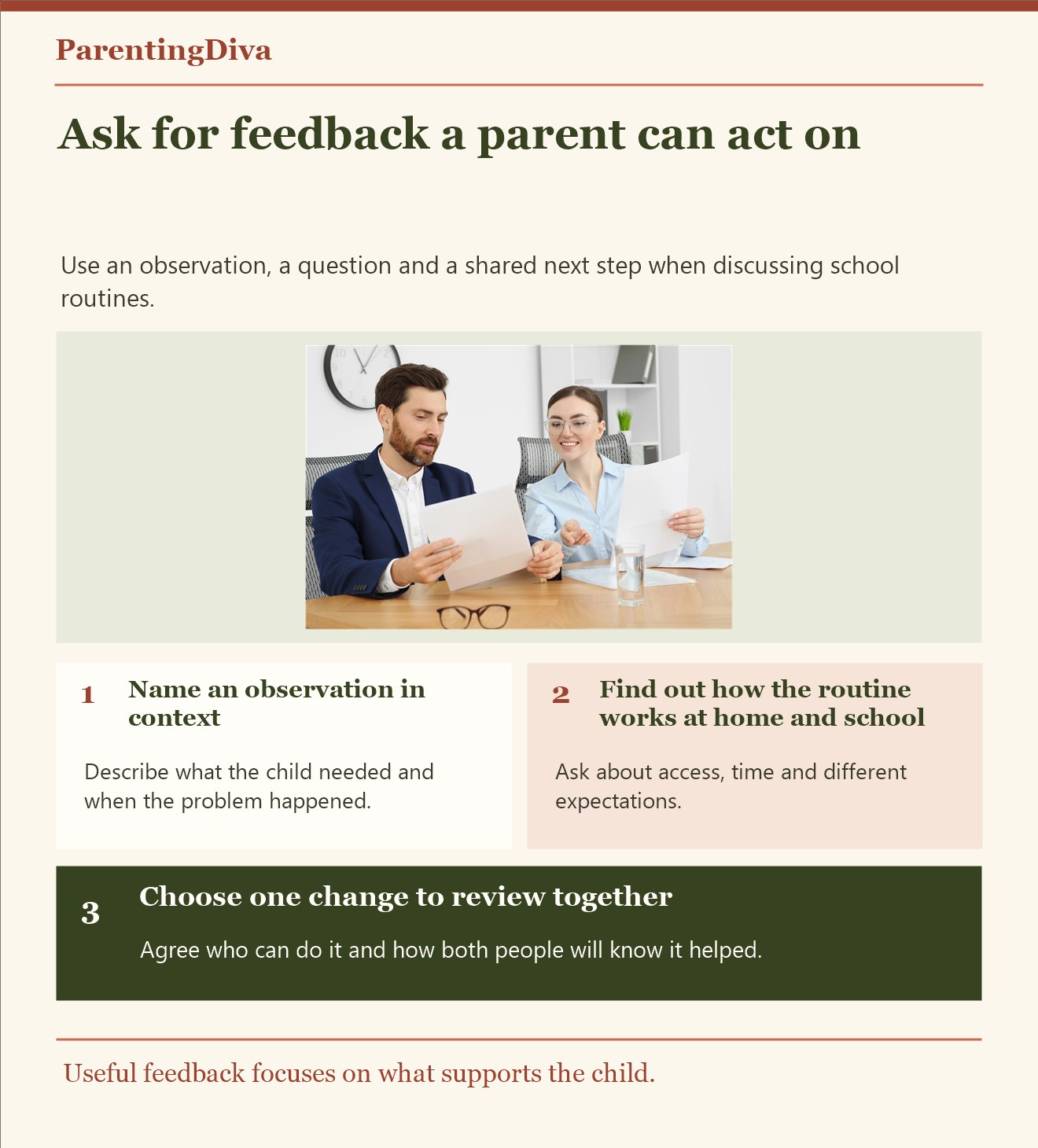
Ask for feedback a parent can act on
Use an observation, a question and a shared next step when discussing school routines.
- Name an observation in context Describe what the child needed and when the problem happened.
- Find out how the routine works at home and school Ask about access, time and different expectations.
- Choose one change to review together Agree who can do it and how both people will know it helped.
Useful feedback focuses on what supports the child.