

Parenting after divorce can involve relief, grief, uncertainty and a long list of practical decisions. Your child may feel differently from you, and their response may change. The end of a marriage does not tell you exactly how your child’s life will unfold.
You do not need to turn the separation into a positive experience or become a perfect parent. Focus on what your child needs to understand, what care is in place and where your family could use support. These priorities can help you choose a manageable next step.
On this page
1. Explain what is changing in words your child understands
Share a simple, honest explanation without asking your child to judge the reasons for the separation. Explain the arrangements you know and be clear about what has not yet been decided.
You might say, “We are making changes to where we live. This is an adult decision; you did not cause it, and it is not your job to put it right.” Adapt the words to your child’s age and what is actually happening. Do not promise that nothing will change.
The American Academy of Child and Adolescent Psychiatry’s guidance on children and divorce recommends straightforward explanations, reassurance that the child is not at fault and keeping adult disputes out of the conversation. Expect questions to return as circumstances change.
2. Make room for feelings without demanding a response
A child may be sad, angry, quiet, relieved or unsure what to say. Siblings can have different reactions. The American Academy of Pediatrics’ advice on supporting children after separation describes varied responses and the importance of steady care.
Try an invitation rather than a test: “What questions have come up today?” If your child does not want to talk, offer another time or a trusted adult they could speak with. Listening does not require immediately finding a bright side.
Keep room for ordinary interests too. A child can enjoy a game or time with friends and still be finding the change difficult. Neither laughter nor silence tells you the whole story.

3. Make everyday arrangements clear and workable
Choose a few reliable anchors, such as the school run, a bedtime routine or how your child can ask for help. If a familiar activity can continue, explain that too. When a plan changes, give the clearest information you can.
Use the examples below only for arrangements that are confirmed. A simple calendar or note can help you explain the week without expecting your child to organise it.
| Question to answer | Example wording to adapt |
|---|---|
| Where will I be? | “You will sleep here tonight. We can look at tomorrow’s plan after dinner.” |
| Who will help me? | “I am collecting you from school on Friday. Your teacher knows the plan.” |
| What if something changes? | “I will explain a change when I know it. You can ask me if you are unsure.” |
You do not need identical homes or a full timetable for every holiday. Start with the next necessary arrangements and notice where an unclear handover, missing belongings or last-minute change keeps causing difficulty.
4. Keep adult conflict and emotional responsibility with adults
Discuss money, legal disagreements and grievances through appropriate adult channels. A child should not have to deliver a difficult message, report on the other household or reassure a parent about the breakup.
If you begin criticising the other parent in front of your child, stop and repair it: “That was an adult frustration. You do not need to take care of it.” Find another adult or professional setting for the fuller conversation.
Ask about your child’s experience without turning questions into an investigation. “Was there anything you needed help with?” leaves more room than a string of questions about another adult’s private life.
5. Put safe care ahead of an ideal picture of co-parenting
Families have different living and contact arrangements. Cooperation can be useful when it is safe and appropriate, but divorce does not automatically mean equal time, weekend visits or a shared celebration.
The NSPCC’s advice on supporting children through separation recognises that co-parenting may be difficult or impossible where there has been domestic abuse. Seek suitable specialist help for safety concerns and local professional advice about arrangements or existing orders.
If your child says they are frightened or uncomfortable, listen carefully and take the concern seriously. Seek appropriate help rather than dismissing it as disloyalty or asking the child to resolve it. For immediate danger, prioritise local emergency or child-protection support.
6. Include practical and emotional support for yourself
A caring response does not require endless energy. Name one pressure that someone else could help with: a meal, an appointment, childcare or a chance to talk privately.
Choose time together that fits the day. Reading a short book or listening while you prepare food can be more manageable than planning an expensive outing to compensate for every difficult moment.
Our article on everyday care and practical support in a single-parent family offers further ideas. If guilt is driving promises you cannot keep, our guide to parental guilt, repair and realistic expectations can help you reconsider the demand.
7. Notice when your child or family needs more help
Pay attention to changes in sleep, eating, school participation, behaviour or daily life, and ask what your child is finding hard. A change is a reason to understand more, not a diagnosis or proof of permanent harm.
Consider speaking with your child’s healthcare professional or an appropriate school support person when concerns persist, intensify or make daily life difficult. Share relevant information about family changes without expecting your child to explain the situation repeatedly.
You can seek help before reaching a crisis. Keep the next step concrete: arrange a conversation, clarify tomorrow’s care or simplify one recurring pressure. Your family can need support while still having strengths to build on.
When a child will begin spending time in two homes
Explain the first few nights and where important school items will be kept. Give the child a chance to choose something familiar to take if appropriate. Provide one adult contact they can ask about changes.
Where there is intimidation, abuse or a formal care arrangement, get relevant advice about what communication and care plans are safe.
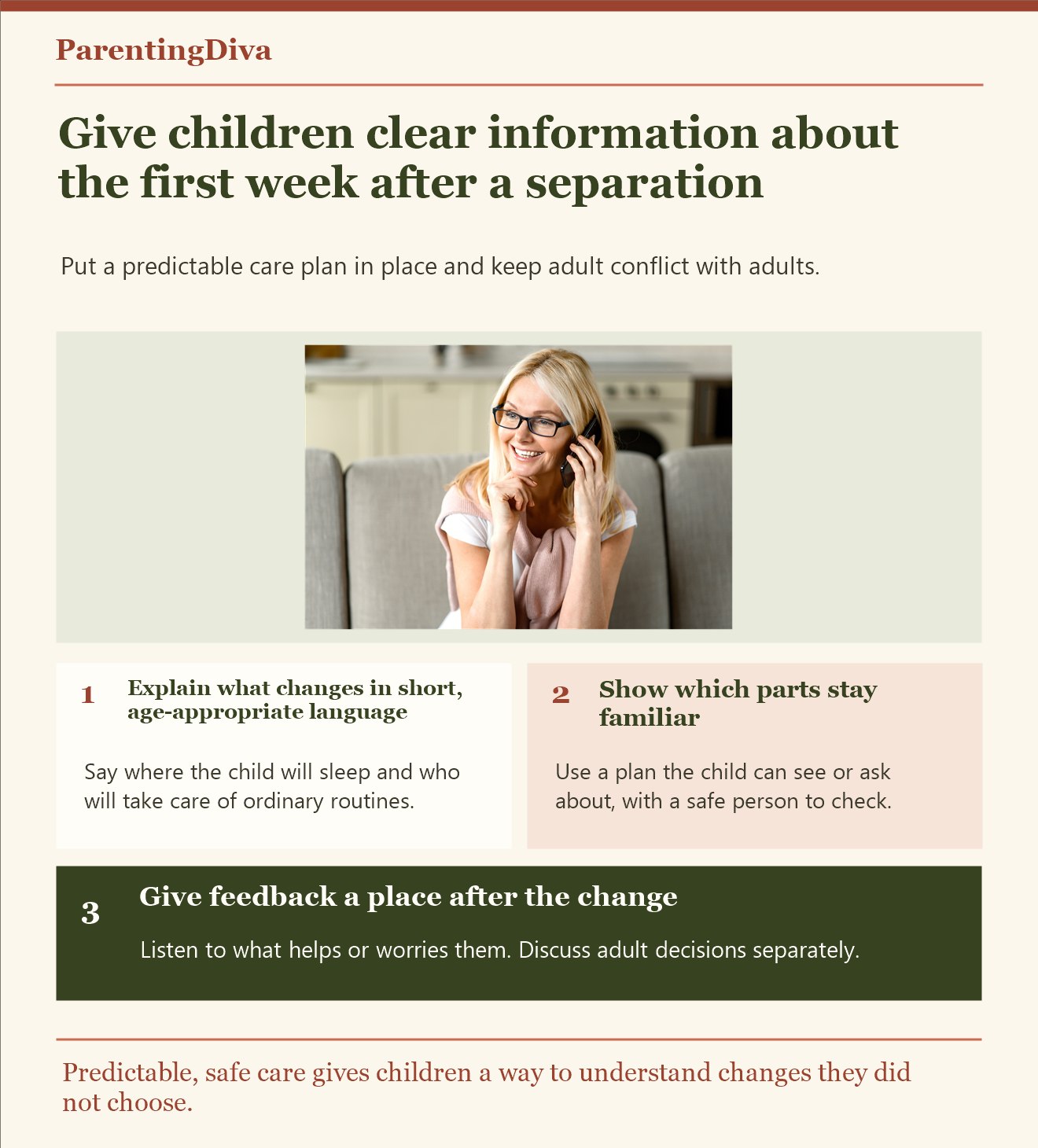
Read the infographic in text
Give children clear information about the first week after a separation
Put a predictable care plan in place and keep adult conflict with adults.
- Explain what changes in short, age-appropriate language Say where the child will sleep and who will take care of ordinary routines.
- Show which parts stay familiar Use a plan the child can see or ask about, with a safe person to check.
- Give feedback a place after the change Listen to what helps or worries them. Discuss adult decisions separately.
Predictable, safe care gives children a way to understand changes they did not choose.
Frequently asked questions
1. How much should children be told about a divorce?
Tell them what affects their daily lives using age-appropriate language. Keep disputes, legal strategies and unnecessary details with adults.
2. What can stay predictable when living arrangements change?
School, regular care routines, communication with safe adults or familiar belongings may stay predictable, depending on the circumstances.
3. Should children carry messages between parents?
Use an adult communication channel where it is safe and appropriate. Keep the child out of the responsibility for delivering messages or settling disagreements.
4. What if communication with a former partner feels unsafe?
Seek advice from a qualified local professional or advocate about safer communication and existing arrangements. Use urgent help for immediate danger.
5. How can I tell if my child needs more support?
Listen to what they say and notice changes in sleep, school, routines or relationships. Ask a healthcare professional, school support person or appropriate service for guidance if needed.