

I used to watch 16 and Pregnant and Teen Mom. I remember watching with my twelve-year-old in mind and wondering what teenagers would take away from the episodes. The money worries, relationship changes and decisions about adoption stayed with me. Seeing those pressures on television gave me more to talk about with young people.
What the researchers measured
Melissa Kearney and Phillip Levine compared MTV viewing patterns and birth records. They estimated that the show contributed to a decline in teen births. A later analysis by David Jaeger, Theodore Joyce and Robert Kaestner found similar patterns in earlier years, before the show aired. That made it harder to separate a possible effect of the show from changes already underway. The studies examined births. The evidence leaves open how much of the decline the show explains.

Ask what the episode leaves out
Talk about a scene your teen remembers. Ask what support the young parent had, what would happen on a school day and who was able to make decisions. Give your teen a chance to disagree with you. They may have noticed something you missed.
Offer a private way to ask questions
Tell them where they can bring questions about relationships, consent and contraception. If they want to speak with a clinician, help them arrange a visit and ask the clinic how it handles private conversations with teens. If a young person you know is pregnant or parenting, ask what practical help they want, such as transport, school arrangements or someone to go with them to an appointment.
For more conversation starters, see how to talk about what children see in media.
When a post says a television show cut teen births
Look past the headline and check who was studied, over how long and what pattern the estimate depends on. Kearney and Levine reported an estimated decline after the show began. Jaeger, Joyce and Kaestner challenged the assumptions used to attribute that decline to the program.
It is useful to read both the original study and the later critique. A media effect may be possible, and other changes in knowledge, behaviour or access can also matter.
Read the original study and Jaeger, Joyce and Kaestner’s published critique.
Read the infographic in text
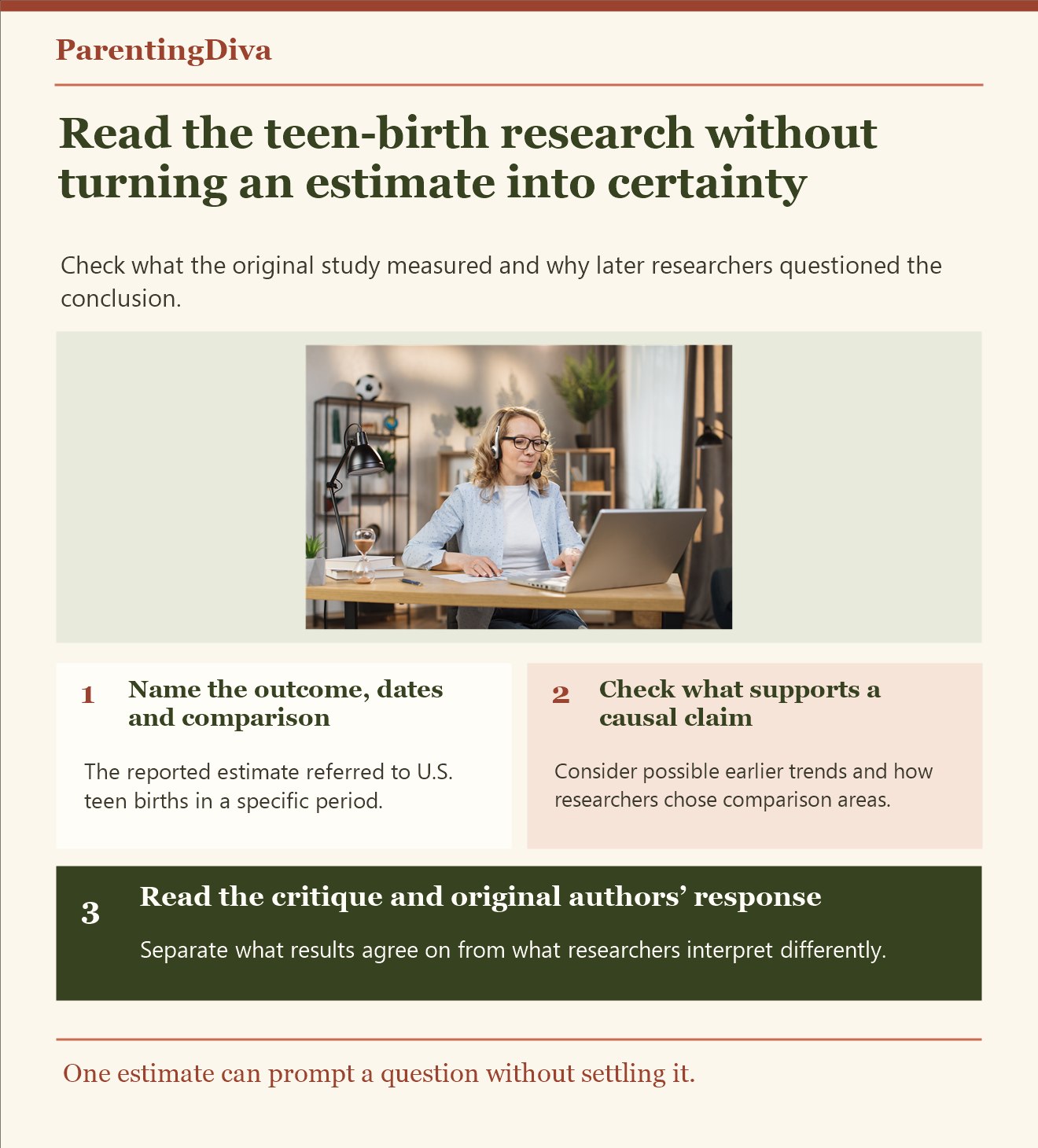
Read the teen-birth research without turning an estimate into certainty
Check what the original study measured and why later researchers questioned the conclusion.
- Name the outcome, dates and comparison The reported estimate referred to U.S. teen births in a specific period.
- Check what supports a causal claim Consider possible earlier trends and how researchers chose comparison areas.
- Read the critique and original authors’ response Separate what results agree on from what researchers interpret differently.
One estimate can prompt a question without settling it.