

When you’re trying to change a habit, a thought like “I always mess this up” can make it harder to begin. So can a crowded schedule, too little sleep or a routine that depends on everyone being ready at the same time. Notice the thought, then look at what would make the next step easier.
When you expect the worst
“Bedtime always turns into a fight” may reflect a rough stretch. Think of one evening that went a little better. What was different? If starting ten minutes earlier helped, try it twice this week and see what happens.
When the task feels out of your hands
Pick one part you can control. You may be unable to make the whole household wake up on time, but you can put shoes by the door or ask another adult to handle breakfast. If the obstacle is a lack of time or support, give that obstacle a name so you can address it directly.

When it’s hard to hear feedback
It can be uncomfortable when someone says a plan is making things harder. Before defending it, ask for one example. You might learn that your child struggles to remember three instructions at once, or that your partner needs a clearer handoff in the morning.
When one setback feels permanent
Describe what happened in terms you can act on. “We forgot the permission slip this morning” gives you more to work with than “We’re hopeless at mornings.” Put it where you’ll see it at the right time, then see whether that helps tomorrow.
Pick one change to try this week
Write down the situation, the thought you tend to have and the smallest step worth trying. After a few attempts, ask whether the step helped or whether the plan needs to change. The result gives you information you can use next time.
Read the infographic in text
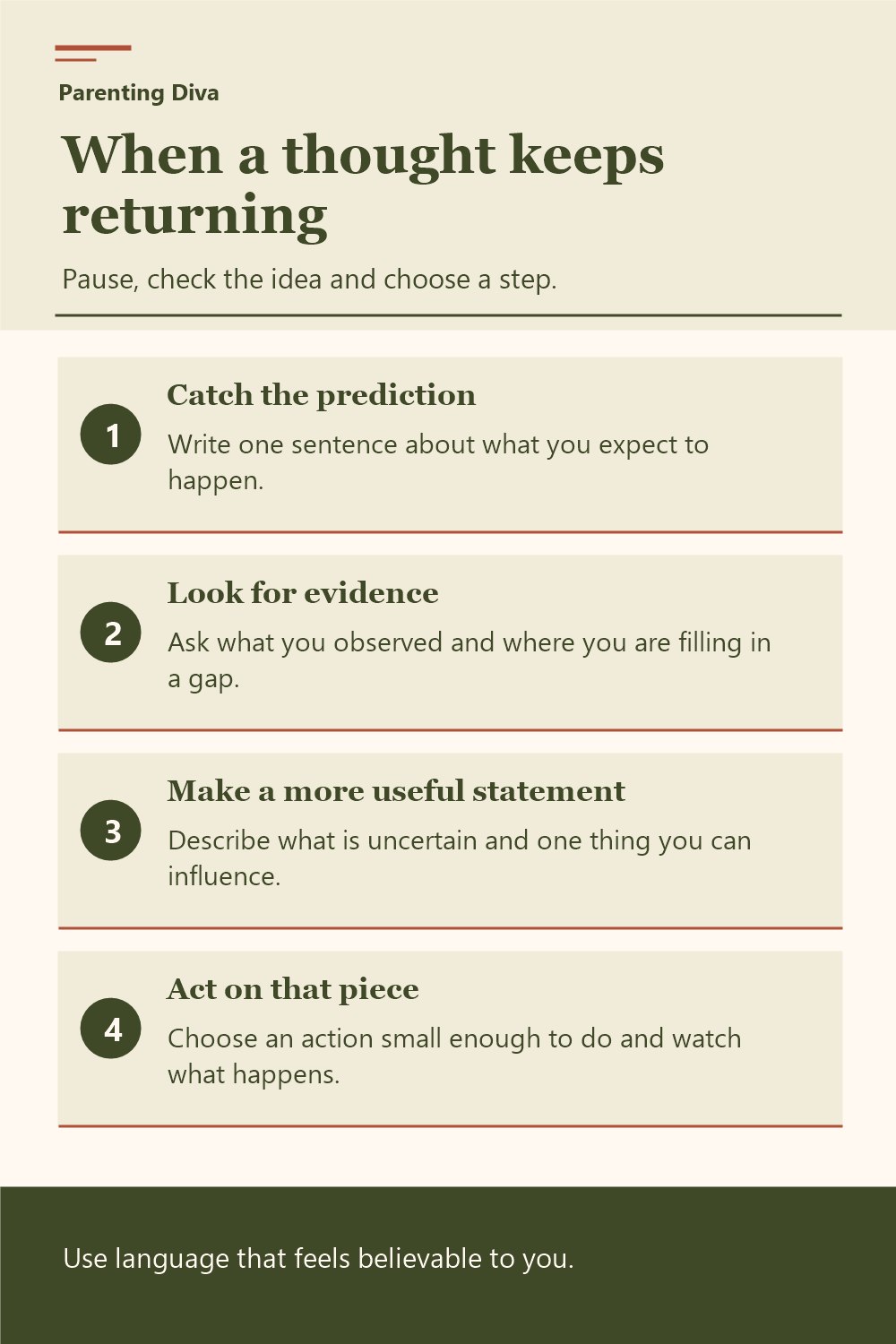
When a thought keeps returning
Pause, check the idea and choose a step.
- Catch the prediction Write one sentence about what you expect to happen.
- Look for evidence Ask what you observed and where you are filling in a gap.
- Make a more useful statement Describe what is uncertain and one thing you can influence.
- Act on that piece Choose an action small enough to do and watch what happens.
Use language that feels believable to you.