

Regret can show up after a small mistake or a decision that changed your life. Start by naming what you wish had happened. Then ask which part you could influence at the time and what, if anything, you can do now.
Look at what you knew then
Write down what you knew before making the choice. Include the time, money, help and information you had. If you missed an event because a shift changed unexpectedly, acknowledge the disappointment and check what you could realistically have done with the notice you had.

Make amends when you can
If your action hurt someone, name what happened and offer a concrete repair. “I said I’d call after your appointment and forgot. I’m sorry. I’ll set a reminder next time.” Give the other person room to respond in their own time. If contacting them would break a boundary they’ve set, respect that boundary.
Use the regret to choose your next step
If you wish you’d spent more time with someone, schedule one realistic way to connect now. If you regret putting off a goal, ask what the first step would cost in time or money. When a choice is in the past, you can still decide what you want to do differently in a similar situation.
Notice when the review has done its job
Give yourself a few minutes to write down the lesson and the action you’ll take. If you find yourself replaying the same details later, return to what you wrote and see whether there’s any new information. When a regret keeps interfering with everyday life, consider talking it through with a trusted person or a counselor.
Read the infographic in text
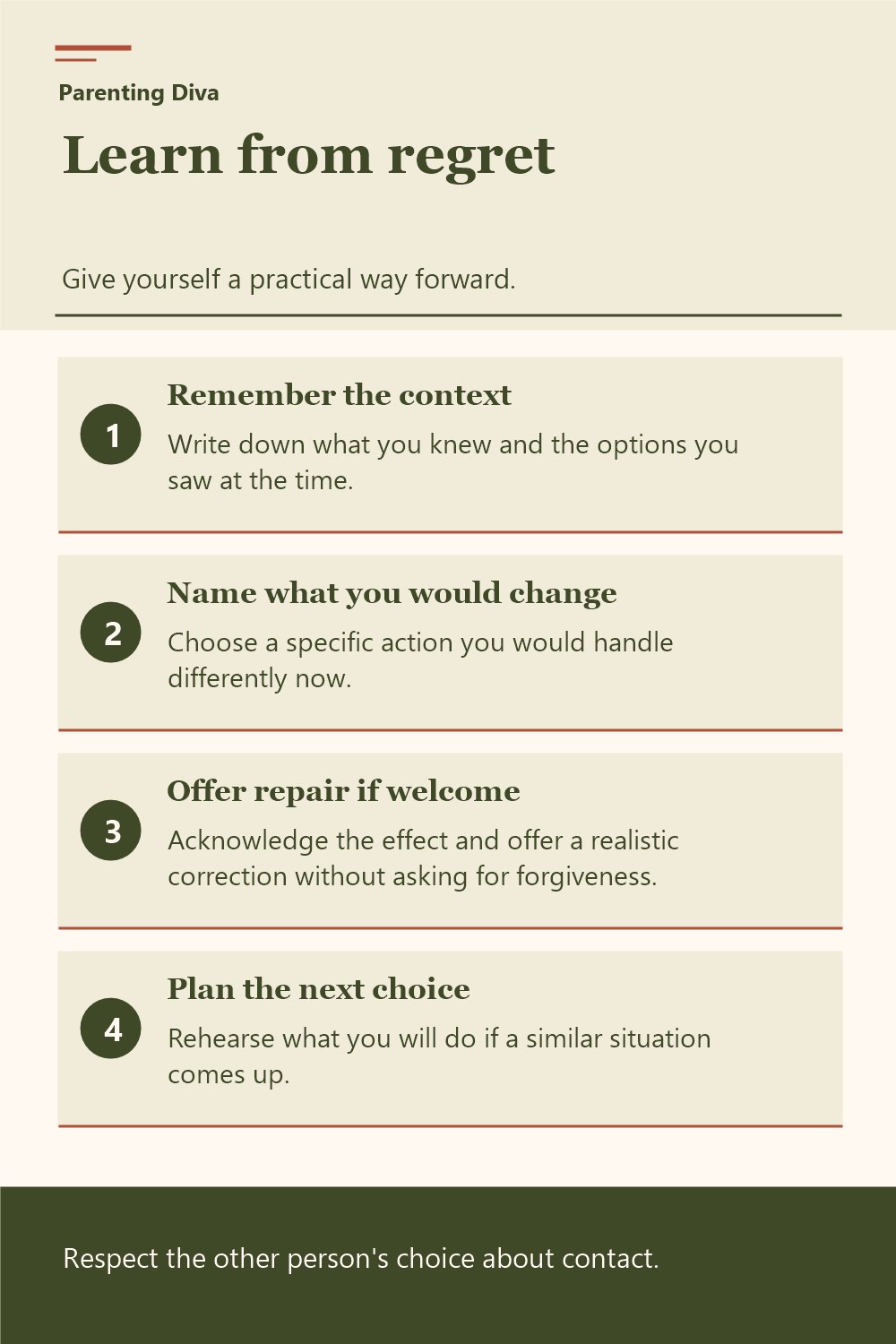
Learn from regret
Give yourself a practical way forward.
- Remember the context Write down what you knew and the options you saw at the time.
- Name what you would change Choose a specific action you would handle differently now.
- Offer repair if welcome Acknowledge the effect and offer a realistic correction without asking for forgiveness.
- Plan the next choice Rehearse what you will do if a similar situation comes up.
Respect the other person’s choice about contact.