

Anxiety can make everyday tasks harder. If you’re trying to get through a difficult moment, focus on what you need for the next few minutes. If anxiety keeps interrupting sleep, work, school or family life, bring it up with a healthcare professional. The National Institute of Mental Health explains how anxiety disorders are assessed and treated.
Choose one step you can manage right now
If you can, sit somewhere you feel safe, notice what you can see and hear, or ask someone to stay with you. Take comfortable breaths without forcing them. When a task feels too large, write down one action you can take, such as asking for more information or asking someone to cover school pickup.
Notice what has changed
If the pattern repeats, note when it happens and how it affects your day. You might write down how often you wake at night or what you’ve started avoiding. Share those details with a clinician. Seek medical care for new or severe physical symptoms, especially chest pain, fainting or trouble breathing.

Ask about treatment and support
A clinician can help you discuss options such as talk therapy and medication. Bring a list of medicines and supplements you already take. Check with a clinician before starting an herbal supplement for anxiety. Some supplements interact with medicines or have other risks. The National Center for Complementary and Integrative Health summarizes the evidence and safety concerns.
Get urgent help if you’re in danger
If you might hurt yourself or cannot stay safe, seek immediate help. In the United States, you can call or text 988 for crisis support. If there’s an immediate medical emergency, call your local emergency number.
When anxious thoughts make a routine phone call feel impossible
Write one question you need answered and keep it nearby. If you want, ask someone to sit with you or check whether another way to get the information is available. Afterward, note what made the task easier.
If avoidance or distress is affecting several ordinary responsibilities, consider discussing it with a healthcare professional. Share an example from your everyday routine.
Read the National Institute of Mental Health’s anxiety information.
Read the infographic in text
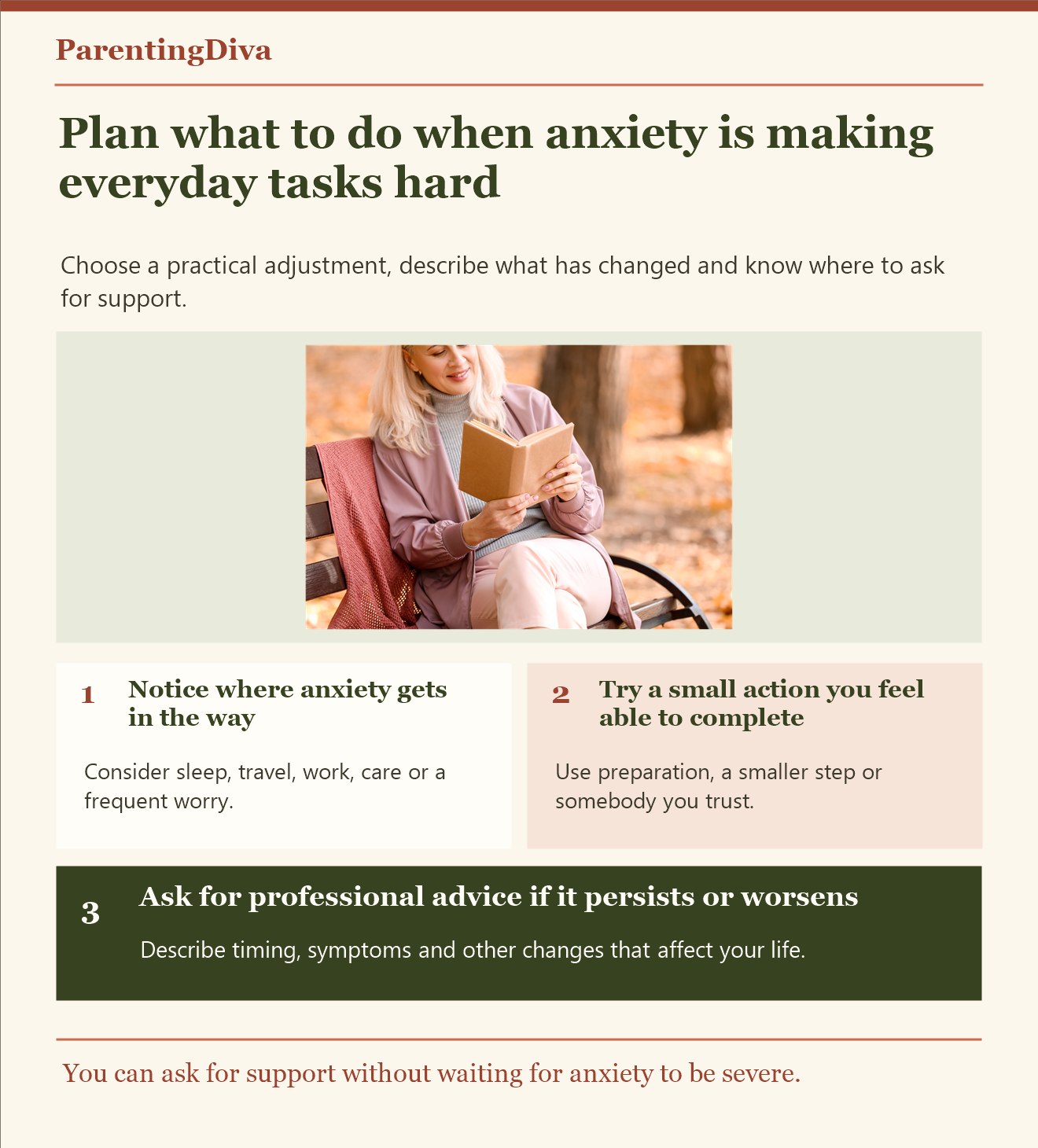
Plan what to do when anxiety is making everyday tasks hard
Choose a practical adjustment, describe what has changed and know where to ask for support.
- Notice where anxiety gets in the way Consider sleep, travel, work, care or a frequent worry.
- Try a small action you feel able to complete Use preparation, a smaller step or somebody you trust.
- Ask for professional advice if it persists or worsens Describe timing, symptoms and other changes that affect your life.
You can ask for support without waiting for anxiety to be severe.