

Dating can bring up uncertainty about how you’ll be seen. You have a decision to make too. Notice whether you enjoy the time together, feel heard and can say what you want. If you’re raising children, give yourself time to see how someone fits into your life before involving your family.

Five ways to keep your needs in view
- Choose a few values you can observe. If reliability matters, notice whether the person keeps plans or lets you know when something changes. If kindness matters, notice how they respond when you disagree.
- Give both people time to talk. Ask a question you care about and share something you’d enjoy talking about. See whether the other person makes room for you.
- Pick a pace that fits your life. A short date can work better than a long evening when you have work or care responsibilities. Say when you need to leave and make a plan you can keep.
- Pay attention to how it feels. Some nerves are ordinary. If you feel pressured, controlled or unable to say no, take that seriously and give yourself room to leave or decline another date.
- Say what’s true for you. Mention a real preference, such as wanting to go slowly or needing to protect time with your children. How someone responds tells you something useful about the connection.
Ask yourself what you want next
After a date, ask whether you felt comfortable being yourself and whether you’d like to see the person again. You can be interested and still take your time. A pause can be the right choice when dating is taking more energy than you have to give.
When a date expects more contact than you want
Explain that you would like to meet again but prefer a short message about plans instead of frequent updates. Give them room to name what works for them. If the result does not fit your needs, you can make a different choice.
When a person asks for access to private messages or gets angry about independent plans, take the response seriously and consider confidential support if needed.
Read the infographic in text
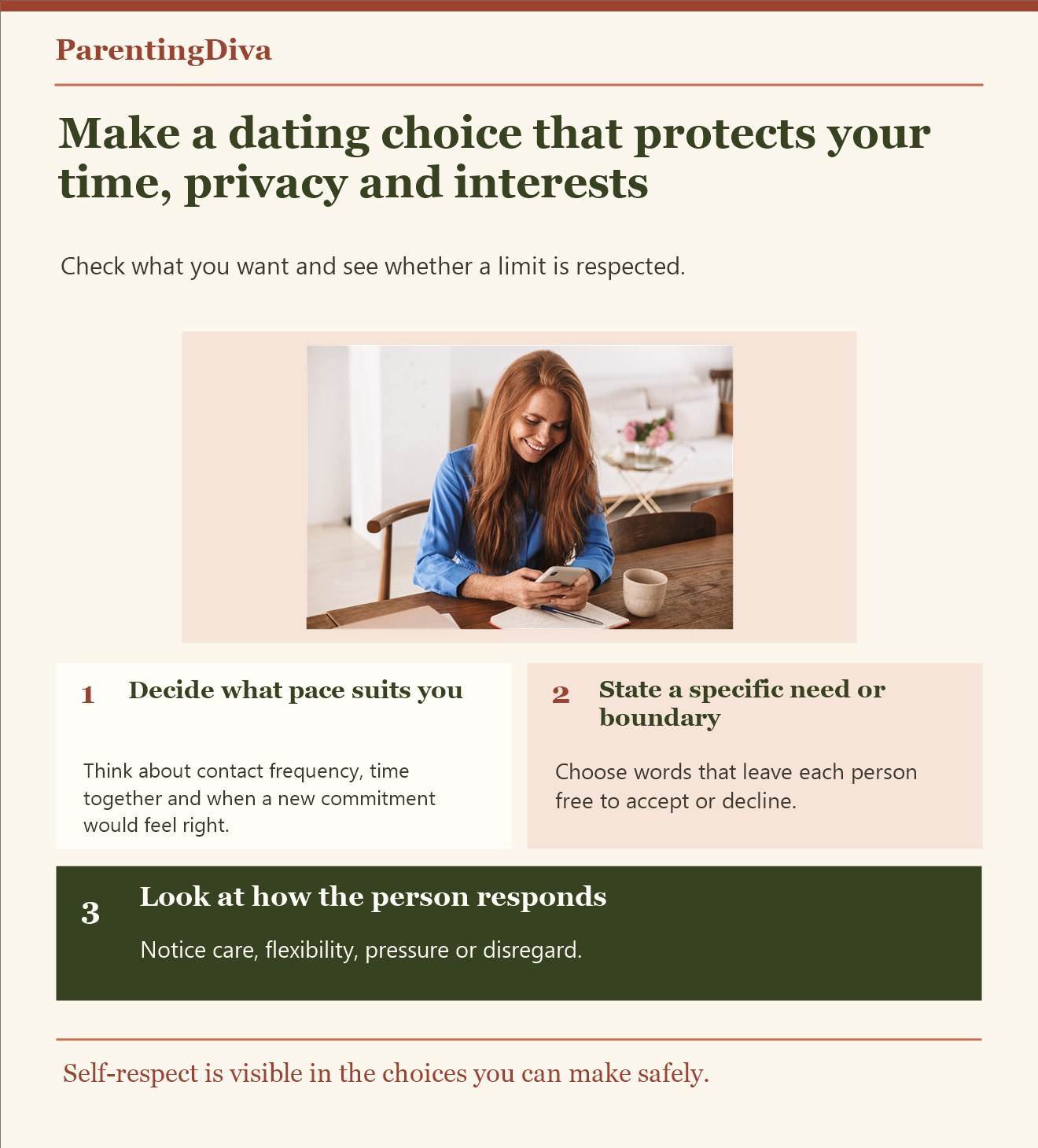
Make a dating choice that protects your time, privacy and interests
Check what you want and see whether a limit is respected.
- Decide what pace suits you Think about contact frequency, time together and when a new commitment would feel right.
- State a specific need or boundary Choose words that leave each person free to accept or decline.
- Look at how the person responds Notice care, flexibility, pressure or disregard.
Self-respect is visible in the choices you can make safely.