When your child breaks a rule, a related consequence can protect others and help them practise what to do next. Start with safety, a short explanation and a response they can understand.
Start with safety and one clear limit
A child throws a wooden block across the room. First move the block or help people get out of the way. Then say what needs to happen in a short sentence, such as “Blocks stay on the mat.” Give the child a chance to practice the safer action when they’re ready.
The American Academy of Pediatrics’ guide to discipline recommends approaches such as clear limits, teaching and attention to behaviour you want to encourage. It advises against hitting, yelling and shaming.
Choose a consequence that connects to the event
A consequence can help a child see what needs to change and try it. If the blocks keep being thrown, put them away for a brief period and offer something safe to throw in an appropriate space. If a child spills something, offer a cloth and help them clean it up at a level they can manage.
Explain the connection in a few words. A response tied to the event is easier to understand than taking away a distant privilege. The CDC’s strategies for responding to behaviour provide examples for parents of toddlers and preschoolers.
Let natural consequences happen only when they’re safe
A natural consequence occurs without an adult imposing it. For example, a paper drawing left outdoors may get wet. You can use the moment to choose a place to keep drawings dry next time.
Step in before consequences that could cause harm. Protect a child near traffic, hot objects or water. Keep access to food, rest, comfort and other basic needs separate from discipline.
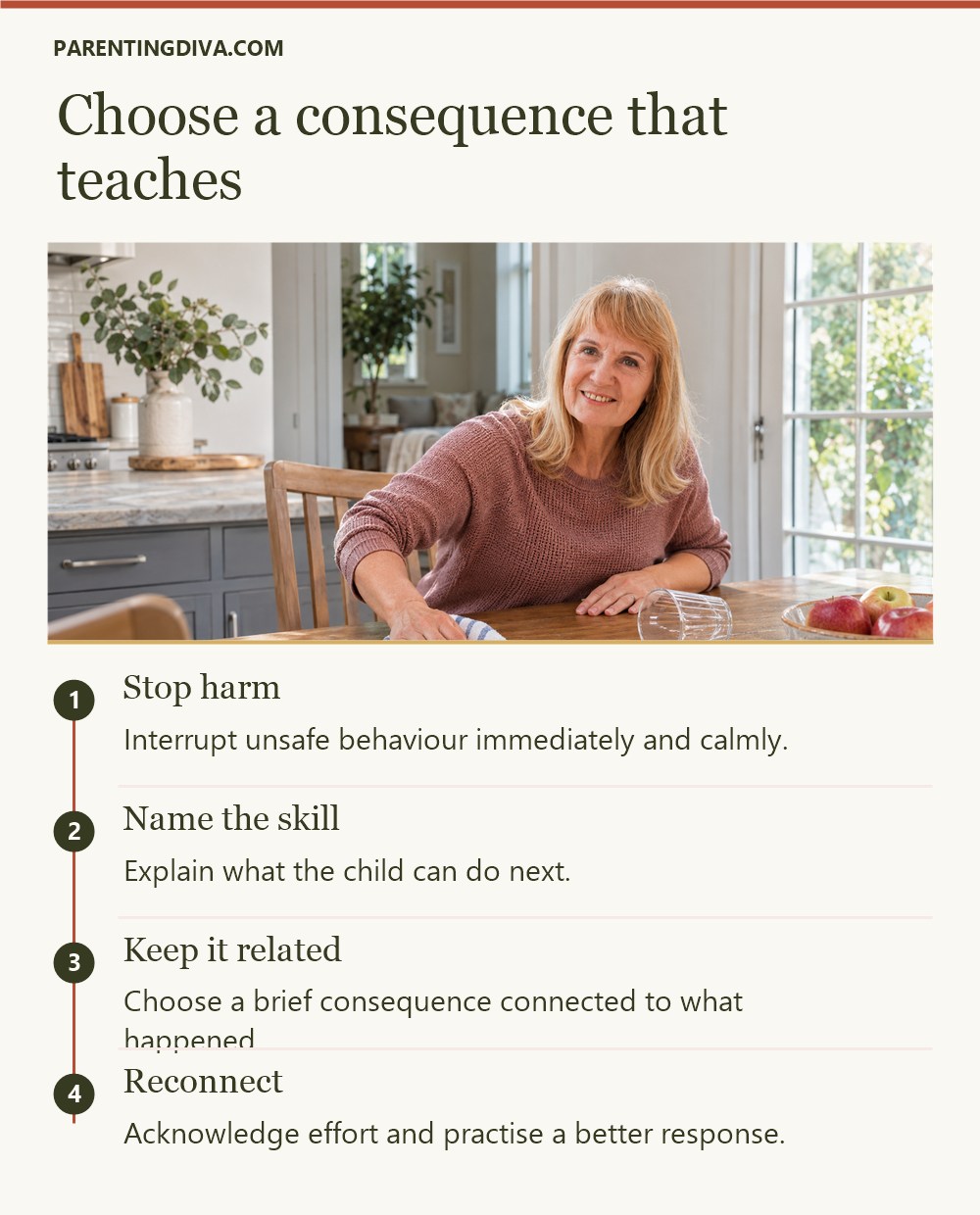
Read the visual guide as text
- Stop harm. Interrupt unsafe behaviour immediately and calmly.
- Name the skill. Explain what the child can do next.
- Keep it related. Choose a brief consequence connected to what happened.
- Reconnect. Acknowledge effort and practise a better response.
Check the expectation and teach the skill
Consider whether the child understands the instruction, can manage the steps and is ready to do it in that setting. It may help to break “clean up your room” into one visible task, such as putting books in a basket. Show what you mean before you expect them to do it independently.
Notice patterns around transitions, hunger, noise or fatigue. If the same event happens every evening, you might practise the skill once at a calmer time, change the setup or cut one demand.
Repair after an overreaction
Suppose you said a child couldn’t play with friends all weekend because they dropped a cup during a rush. When you’re calmer, say “I gave you a consequence that was too big. We’ll clean this up together and put the cup farther from the edge next time.” You can take responsibility and keep teaching the limit that matters.
If a child hurt someone, help them notice what happened and choose a realistic repair. They might help rebuild a knocked-over tower or ask what their sibling needs once both are calm.
Make a plan with other caregivers
Agree on one rule, the words to use and what adults will do if the behaviour continues. For instance, everyone can say “Feet stay off the coffee table,” move the child to a suitable play area and praise the safer behaviour when it happens. Discuss differences privately so the child can focus on the expectation.
If you repeatedly face unsafe behaviour or feel stuck, ask a pediatrician or qualified child professional about support. Describe what happens before and after the behaviour and which adjustments you’ve tried.
Related reading. Parental Guilt: Repair, Realistic Expectations and Support.
Frequently asked questions
1. How do consequences and punishment differ in positive parenting?
A useful consequence connects to a behaviour and teaches a response or helps repair harm. Positive discipline keeps safety, learning and connection in view.
2. What is an example of a related consequence?
If a toy is being thrown, take it out of play briefly and practise where it can be used safely. Give the child another chance when they can manage it.
3. When is a natural consequence unsafe?
Intervene when inaction could lead to harm, including near traffic, heat, sharp objects or unsafe water. Protect the child first.
4. What if I set a consequence that was too harsh?
Explain briefly that you are changing your response. Keep a clear limit and choose a shorter, more related way to practise or repair.
5. What if the same behaviour keeps happening?
Look at timing, expectations and whether the child has practised the skill. If behaviour is unsafe or hard to manage consistently, ask a pediatrician or qualified child professional for help.