

Adjusting to single parenting can involve changes in routines, responsibilities and what your children need to understand. Every family arrives here differently, and you do not have to explain your circumstances to everyone who asks. Focus first on what your household needs now, with clear information, dependable care and practical support for you as well as your children.
On this page
Identify what needs attention first
Start with the immediate arrangements: who is caring for the children, where they need to be, and which essential tasks or appointments are coming up. A short list can be more useful than a complete new life plan. Add the questions you cannot answer yet.
Ask for specific help where it is available: a school pickup, a meal, company during an appointment or help finding a local service. Check what the person can reliably offer and keep essential care arrangements clear. Needing help is not a failure to manage independently.
Some tasks can wait, while safety and necessary care cannot. Choose what keeps the household functioning rather than expecting every room to be tidy. If the essentials are becoming difficult to manage, contact an appropriate local service or your child’s health professional to discuss support.
Build a routine you can explain and adjust
Choose a few predictable points in the day, such as getting ready for school or a bedtime activity. Tell children what will happen next using language they can understand. A routine can guide the day without accounting for every minute or preventing every difficult feeling.
When plans change, give the information you have: “Today someone different will collect you. I will see you after dinner.” Avoid promising an arrangement you cannot confirm. If another household is involved, keep necessary communication between adults rather than asking a child to carry messages.
Follow arrangements that apply to your family and seek appropriately qualified advice if there is a dispute or concern. Cooperation looks different in different circumstances. You do not have to agree to unsafe contact to appear accommodating.
Give children space to ask and feel
Offer a simple, truthful explanation of changes without asking children to take sides or manage adult emotions. Let them know which parts of everyday life will stay familiar. If you do not know an answer, you can say so and explain when you expect to know more.
Ask an open question such as, “What has been hardest about this week?” Listen before correcting or reassuring. A child may repeat a question or express mixed feelings. You can acknowledge the feeling while keeping a clear limit on hitting, hurting or other unsafe behaviour.
Avoid treating a comparison with another household as a contest. Ask what the child means and address the specific issue. Differences in rules do not require you to criticise another caregiver or dismiss a child’s concern. Seek help if distress or behaviour is persistently affecting daily life.

Protect adult support and personal choices
Your own rest, health care and adult company matter. Arrange safe, dependable care before taking time away, and choose a manageable break rather than adding pressure to enjoy yourself. Children should not have to become your main source of reassurance or responsibility for adult problems.
Dating is a personal choice, with no required timetable. You can keep early dating separate from your children’s routines. If you later consider an introduction, think about your child’s comfort, the person’s behaviour and what you know about the relationship, without promising that a new partner will become family.
Keep some privacy for yourself while staying responsive to a child’s safety and care needs. You can say, “That is an adult matter, and you can always ask me about what affects you.” A boundary does not require an elaborate explanation or a negative account of another person.
You can love your children and wish a difficult stage were easier. That feeling does not mean you are wasting their childhood. Notice what gives you some room to cope and what additional support would make the next week more manageable.
Review one arrangement at a time
Choose a short review point: what has become easier, what is still unclear, and which arrangement needs changing? Include children’s views in ways that fit their age and understanding, while keeping responsibility for adult decisions with adults.
The American Academy of Pediatrics’ single-parenting guide includes ideas about routines, support and dependable child care. Use further guidance to identify questions for your own family, rather than expecting one household to look like another.
Begin with one practical adjustment: confirm tomorrow’s pickup, ask someone about a task or make time for a quiet conversation. You do not have to show other people that you can do everything. A workable plan includes what you can manage and the support you need.
When a change in family arrangements affects school mornings
Make a list of who will wake up with the child, who can collect them and what school needs to know. Tell the child the next few steps. Ask a trusted person to help with one practical gap.
Save longer conversations for another time. If arrangements involve threats, legal commitments or uncertainty about safety, seek appropriate advice privately.
Read the infographic in text
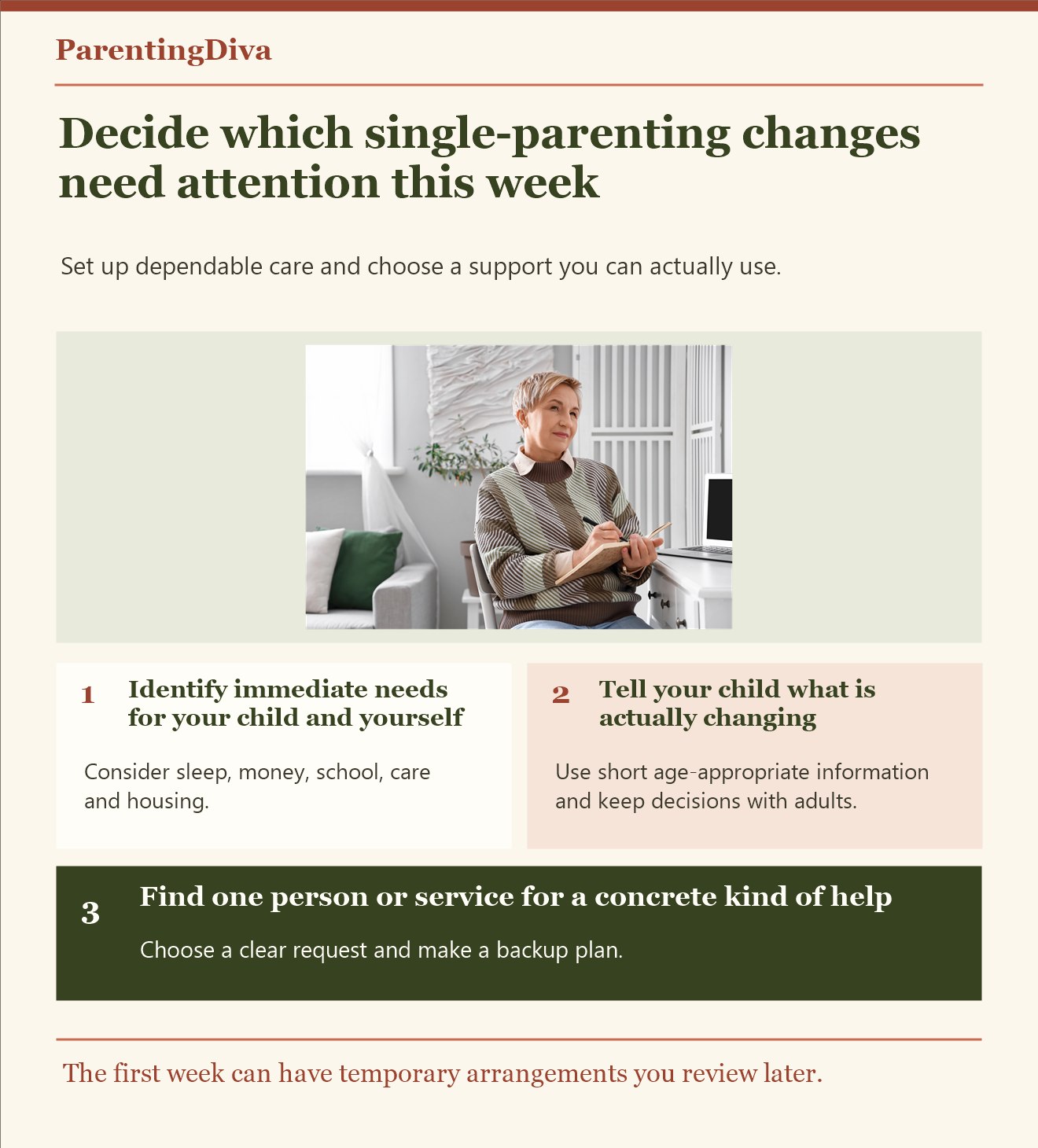
Decide which single-parenting changes need attention this week
Set up dependable care and choose a support you can actually use.
- Identify immediate needs for your child and yourself Consider sleep, money, school, care and housing.
- Tell your child what is actually changing Use short age-appropriate information and keep decisions with adults.
- Find one person or service for a concrete kind of help Choose a clear request and make a backup plan.
The first week can have temporary arrangements you review later.