

Disagreements can become more frequent as tweens and teens ask for more independence. Start with one recent problem, such as a missed curfew or a chore that keeps getting skipped. Talk about it when you both have time to listen.
Start with what happened
- Describe one event. “I expected you home at eight and didn’t get a message” gives you something concrete to discuss.
- Ask what got in the way. Your child may have lost track of time, had trouble getting home or misunderstood the agreement. Listen before deciding how to respond.
- Explain the limit and why it matters. Talk about safety, shared space or another clear reason. If a rule has changed, say so before expecting them to follow it.

Agree on what happens next
- Offer real choices. If the dishwasher needs to be emptied before dinner, let your child choose whether to do it before or after homework. Keep any safety requirements clear.
- Notice follow-through and check back. Thank them for a specific thing that helped. If the problem keeps happening, revisit the agreement and look for a change you can both keep.
If things get heated, say when you can return to the conversation and take a break. If a sudden change in behavior comes with an ongoing problem at school, changes in sleep or a concern about safety, ask your child what support would help and consider speaking with their school or healthcare provider.
When a screen-time argument follows homework trouble
You might say: “I’m getting upset. Let’s pause for ten minutes. Then let’s talk about what homework still needs to happen and when the device can be used.” Hear what made starting hard before choosing a plan.
When safety is involved, keep the limit in place. Return to the conversation later to explain what happened and offer room for repair.
Read the infographic in text
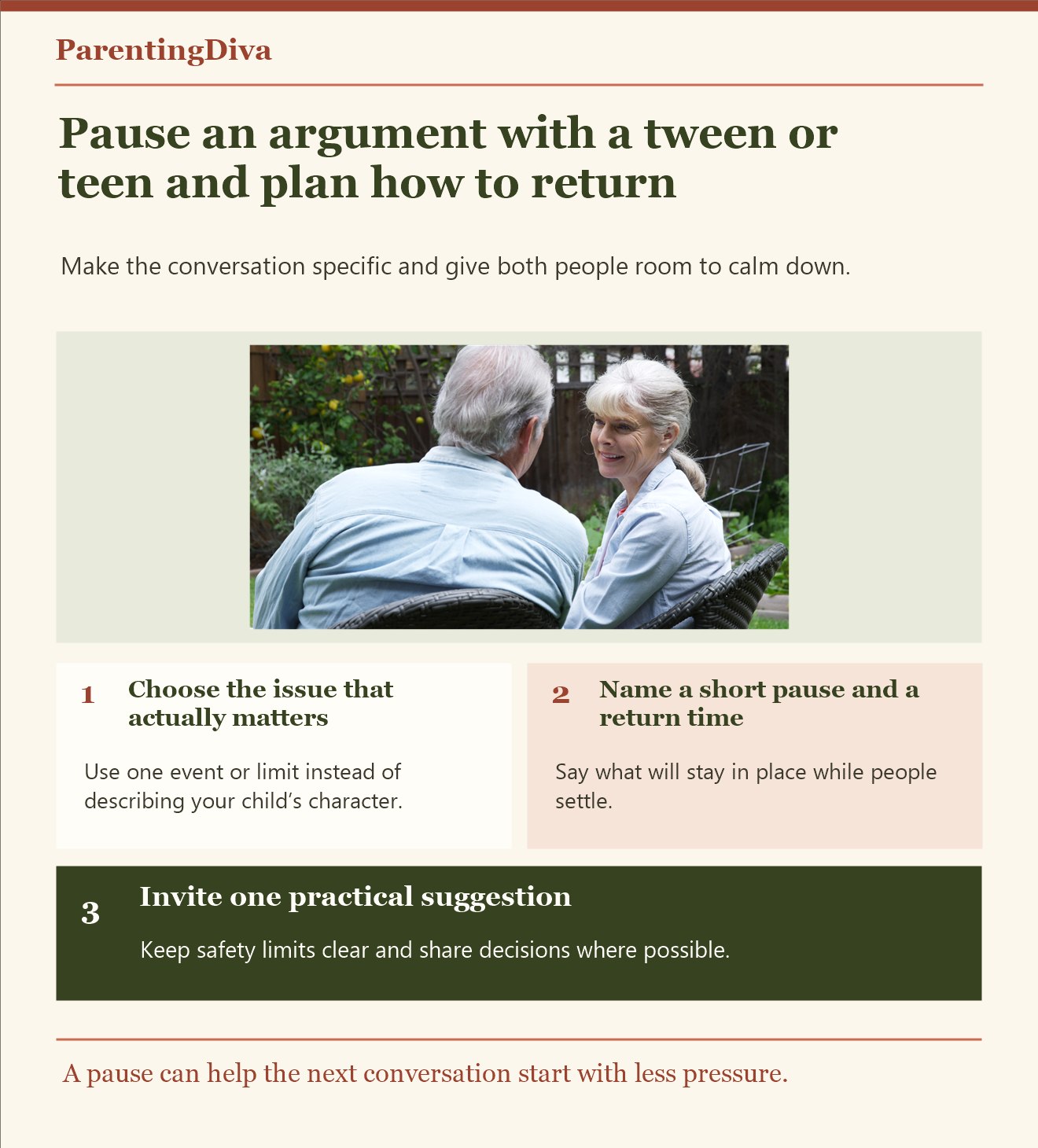
Pause an argument with a tween or teen and plan how to return
Make the conversation specific and give both people room to calm down.
- Choose the issue that actually matters Use one event or limit instead of describing your child’s character.
- Name a short pause and a return time Say what will stay in place while people settle.
- Invite one practical suggestion Keep safety limits clear and share decisions where possible.
A pause can help the next conversation start with less pressure.